
Zojirushi NW-QAC10 Review: A Premium 5.5-Cup Induction Cooker for People Who Care About Rice
"A superb 5.5-cup induction cooker that turns out exceptional white and brown rice — as long as you can stomach the premium price and its unhurried cook times."
As an Amazon Associate we may earn a commission from qualifying purchases made through links on this page, at no extra cost to you.
By the Fuzzy Logic Team
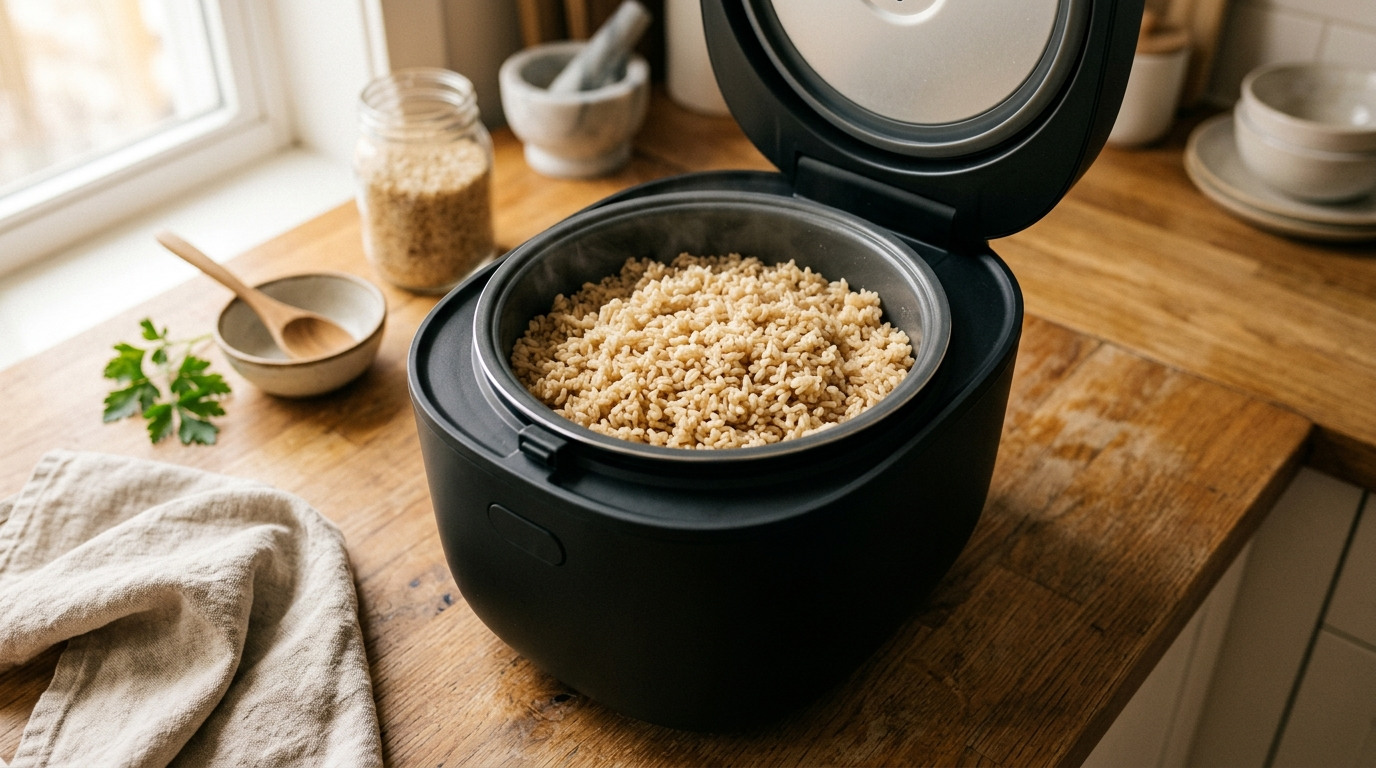
Zojirushi’s induction cookers have a reputation that borders on folklore in the rice-cooker world — expensive, slow, and quietly excellent. The Zojirushi NW-QAC10 sits squarely in that lineage: a 5.5-cup induction heating (IH) rice cooker and warmer aimed at people who eat rice most days and want it to taste like it came from a good Japanese restaurant rather than a steamy dorm-room appliance.
This is not a hands-on lab test, and we did not run timed cooking trials in a test kitchen. Instead, we synthesized verified owner reviews from the product’s Amazon listing together with Zojirushi’s published specifications to explain what the NW-QAC10 actually does well, where it frustrates people, and who it is really for. Our 4.5-star rating is an editorial judgment — our informed opinion of the cooker’s overall value — not an average of owner star ratings and not a measured result.
What is the Zojirushi NW-QAC10?
The NW-QAC10 is a microcomputer-controlled (Micom) rice cooker that heats with induction rather than a traditional bottom heating plate. In Zojirushi’s lineup, the IH cookers are positioned as the more premium tier above its standard Micom machines — the step you take when you have decided that rice is a daily staple worth investing in. The “5.5-cup” rating refers to uncooked capacity, which is enough cooked rice for roughly a small-to-medium household and is by far the most common size for Japanese home cookers.
The headline hardware story is familiar to anyone who has followed the brand: an induction-heated, platinum-infused nonstick inner pan, a heavy lid that seals well, and a control panel dense with menu settings. The NW-QAC10 is made in Japan, which owners frequently cite as a reason for both the price and the long-term confidence in the build.
Key specifications at a glance
These details are drawn from Zojirushi’s published product materials and the Amazon listing; check the current listing for the authoritative, up-to-date spec sheet. Listing copy sells platinum-coated induction and GABA brown rice. Our note is whether those extras matter if you do not eat rice most days.
- Capacity: 5.5 cups uncooked white rice (about 10 cups cooked)
- Heating: Induction Heating (IH), with the inner pot itself acting as the heat source
- Control: Micom (microcomputer) fuzzy-logic temperature management
- Inner pot: Nonstick with platinum-powder coating
- Menu settings (typical): White rice (regular, softer, harder), sushi, sweet, mixed, porridge, GABA brown rice, umami, rinse-free, and quick cooking, plus steam-reduce and scorch options
- Keep functions: Automatic keep warm, extended keep warm, and a reheat cycle
- Interface: LCD panel that doubles as a clock, with a delay timer for setting rice in advance
- Origin: Made in Japan
How induction heating actually changes the rice
The reason people pay this much for an IH cooker is texture, and the mechanism is worth understanding before you spend the money. A conventional rice cooker heats a plate under the pot and lets that heat conduct upward through the rice and water. An induction cooker like the NW-QAC10 instead drives a magnetic field that generates heat inside the metal inner pot itself. The pot becomes the heat source, which means heat rises more evenly from all sides and the controller can adjust temperature quickly and in fine increments — exactly what fuzzy-logic algorithms need to nail the delicate transition where starch gelatinizes.
The inner pot matters just as much as the heating method. Zojirushi infuses platinum particles into the nonstick coating and states that this makes the cooking water slightly alkaline, which it says improves the gelatinization of the rice starch and produces a sweeter, more evenly cooked grain. Whether you find that chemistry compelling or just good marketing, the practical result that owners consistently report is rice that is fluffy and separate rather than gummy or crusted — the thing that separates a great cooker from an acceptable one.
This is also why the GABA and umami settings exist. The umami cycle extends the pre-soak and cooking time to draw more flavor out of the rice, while the GABA brown-rice setting holds the brown rice at a warm soak long enough to begin germination, activating gamma-aminobutyric acid (GABA) in the grain. Germinated brown rice is a long-established food tradition, and Zojirushi’s own product materials describe the setting in those terms; we are not making a health claim about it here, only noting what the cooker is doing and why brown-rice enthusiasts seek it out. For a deeper look at cookers built around whole grains, see our guide to the best rice cooker for brown rice and GABA.
What owners genuinely love
Across verified owner reviews, a few themes come up again and again, and they line up with what the design is supposed to deliver.
- Rice quality that surprises people. The most common sentiment from people upgrading from a basic cooker is that they did not realize rice could taste this different. White rice comes out evenly cooked with no scorched bottom layer, and sushi rice reaches the slightly firm, glossy texture that matters when you are making rolls.
- Brown rice that people actually want to eat. Owners who bought the cooker largely for the GABA setting say brown rice comes out tender and chewy rather than the hard, uneven result cheaper cookers produce. If brown rice is a priority, this is the setting that justifies the upgrade.
- Keep-warm that holds for hours. The extended keep-warm mode is repeatedly called out as a quiet strength. Owners report that rice left on keep-warm for many hours does not dry out or turn yellow the way it can in lesser machines, which matters for households that eat in shifts.
- Durability and confidence. Several owners frame the purchase in years rather than months — buying a cooker they expect to keep for a long time, which softens the sting of the price.
What owners gripe about
No cooker at this price is universally loved, and the honest complaints are consistent enough to take seriously.
- The price is the main objection. This is simply an expensive appliance, and owners are candid that you have to really care about rice — or cook a lot of it — for the math to work. If rice is an occasional side dish, it is hard to justify.
- Patience is required. The umami and especially the GABA cycles are long. Owners warn that the GABA setting in particular can take on the order of three hours, so it rewards people who plan ahead and punishes people who want rice in twenty minutes.
- Capacity versus cost. For the money, some owners note that 5.5 cups feels modest, and larger households end up cooking in batches. That is the trade-off of the compact Japanese form factor, not a flaw, but it is real.
- Heft and care. The inner pot is heavy — partly why the rice comes out so well — and the nonstick coating needs to be treated gently: the included paddle, no metal utensils, no abrasive scrubbers. A few owners mention a learning curve with the number of menu options.
Who should buy the NW-QAC10 (and who shouldn’t)
This is a cooker for a specific person: someone who eats rice most days, cares about texture enough to taste the difference, and is willing to treat the appliance as a long-term investment. If you make sushi at home, cook a lot of brown rice and want the GABA option, or you have outgrown a cheap one-button cooker and keep being disappointed by the results, the NW-QAC10 is aimed directly at you. Small households that value counter space and build quality also tend to be happy here.
It is a poor fit for occasional cooks who only need rice now and then, anyone who wants a fast weeknight batch, or large families who would blow past 5.5 cups at a single meal. It is also hard to recommend if budget is the deciding factor — you can get genuinely good fuzzy-logic rice for a fraction of the cost elsewhere on the site.
How it fits alongside other Zojirushi cookers
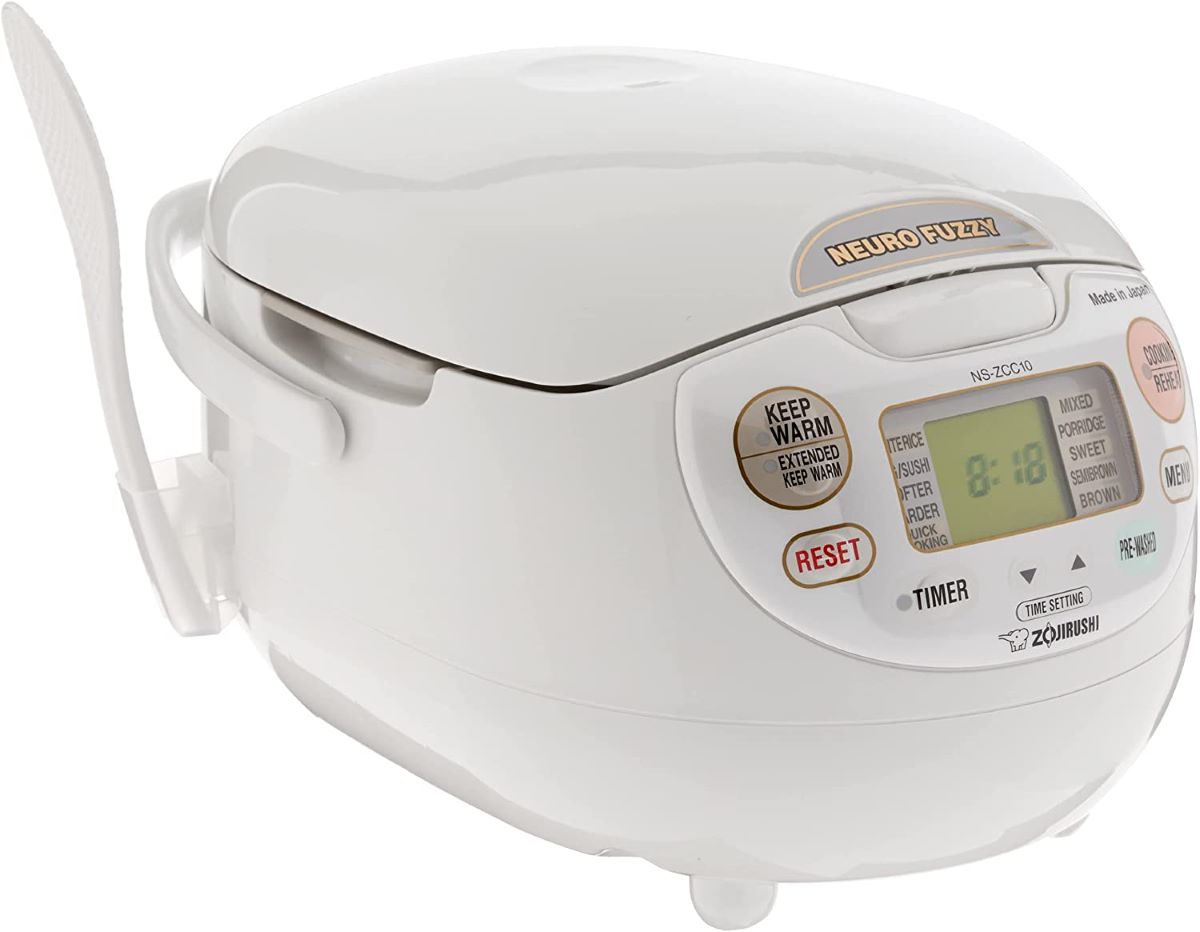
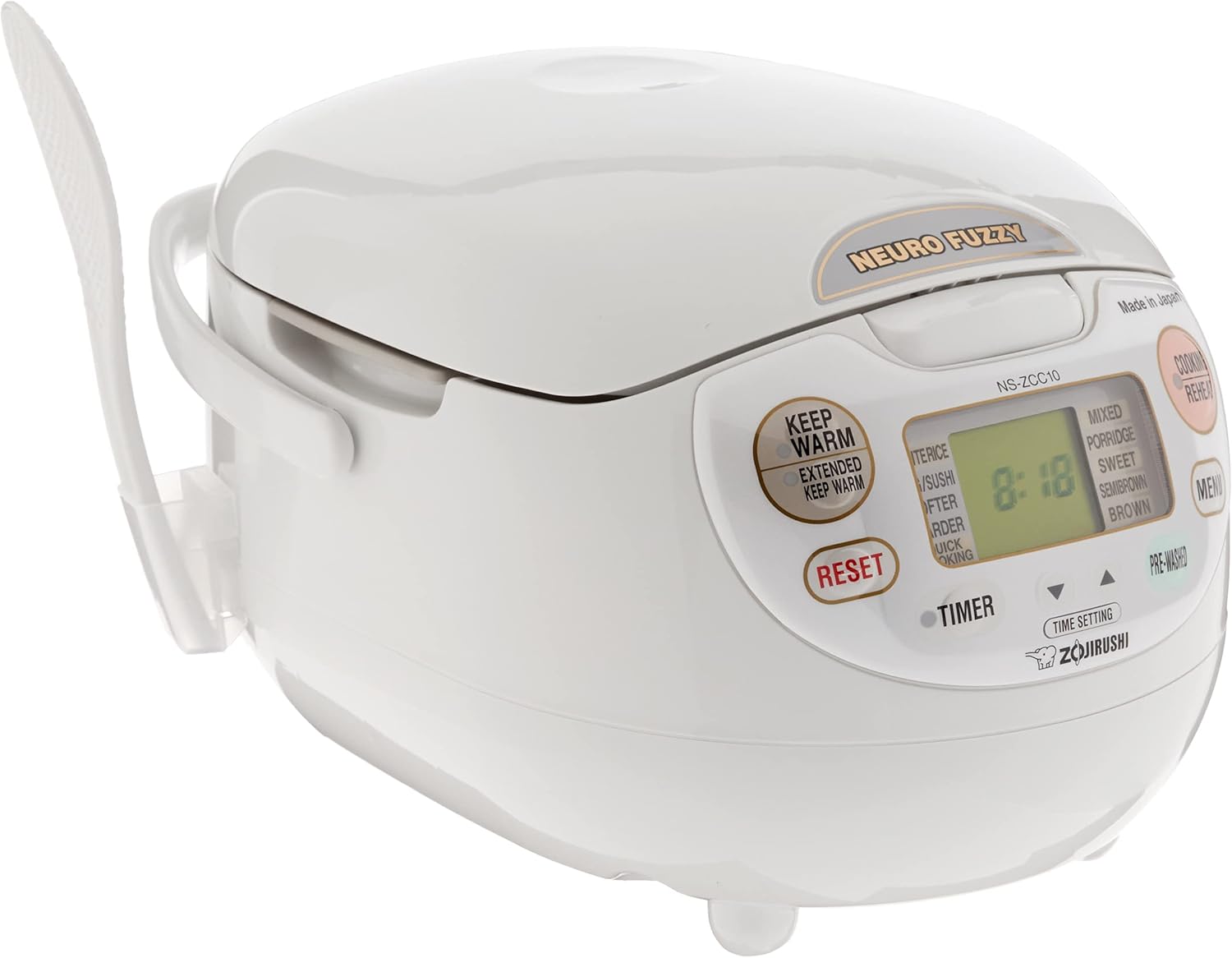
If you are comparing within the brand, the NW-QAC10’s closest spiritual relative is the Zojirushi NP-HCC10, an induction cooker long praised for making brown rice worth eating — a natural read if you want to weigh two IH options against each other. Stepping down from induction to Zojirushi’s legendary fuzzy-logic (but non-IH) Micom platform, the Zojirushi NS-ZCC10 “Neuro Fuzzy” is the cooker most often named as the value alternative: not induction, but a proven design at a lower price. And for broader context, our roundup of the best Japanese rice cookers places Zojirushi’s IH machines against the wider field.
The honest bottom line
The Zojirushi NW-QAC10 is exactly what it looks like: a premium, made-in-Japan induction cooker that rewards daily use and patient cooking with rice that is genuinely better than what most kitchens produce. Its weaknesses are the predictable ones for the category — high price, slow specialty cycles, and a capacity that feels small next to the cost. None of those are defects; they are the terms of the deal.
Our editorial verdict is that for the right owner — a frequent rice eater who values texture and longevity — it earns its place and its rating. For everyone else, there are excellent cheaper options that will make you happier. Check the current price and listing on Amazon before deciding, and weigh it against the alternatives above.
Common questions about the NW-QAC10
How long does the GABA brown rice cycle take? The GABA setting is intentionally slow because it holds the rice at a warm soak to begin germination before cooking. Owners describe it as roughly a three-hour commitment, so it is best started well ahead of dinner rather than when you are already hungry.
Is it worth it over the NS-ZCC10 Neuro Fuzzy? It depends on what you value. The NW-QAC10 adds true induction heating and the GABA setting; the NS-ZCC10 is a beloved fuzzy-logic Micom cooker at a lower price but without induction. If brown rice and maximum texture are the priority, lean induction. If you want Zojirushi quality for less and can skip IH, the Neuro Fuzzy is the value pick.
Can it cook grains other than white rice? Yes. The menu includes settings for mixed rice, sweet rice, porridge, and rinse-free rice, and owners use it for a range of grains and one-pot mixed dishes. For multigrain and mixed-grain cooking specifically, our guide to the best rice cooker for multigrain and mixed grains is worth a look — though note this model’s 5.5-cup size favors smaller batches.
How do I keep the nonstick coating in good shape? Use the paddle that comes with the cooker, avoid metal utensils and abrasive scrubbers, and let the pot cool before washing. Treated gently, the coating holds up well over years of use according to owners who have had Zojirushi cookers for the long haul.
Does the keep-warm really last all day? Owners consistently report that both the standard and extended keep-warm modes hold rice in good condition for many hours without it drying out or discoloring, which is one of the most praised everyday features of the machine.
✅ Pros
- Induction heating plus a platinum-coated inner pan produce notably even, fluffy rice
- GABA brown-rice and umami settings genuinely elevate whole grains and sushi rice
- Extended keep-warm holds rice for many hours without drying it out
- Made in Japan, with the build quality Zojirushi is known for
❌ Cons
- One of the most expensive 5.5-cup cookers you can buy
- Specialty cycles like GABA and umami can run two to three hours
- The 5.5-cup capacity may feel small relative to the price
- A heavy inner pot, and the nonstick coating demands careful handling
🍚 You Might Also Like
Zojirushi NP-HCC10 Review: The Induction Heating Cooker That Makes Brown Rice Worth Eating
A premium induction-heating cooker that consistently turns out superb rice — especially brown and GABA — if you can stomach the price and the unhurried cook times.
Zojirushi NS-ZCC10 Review: The Neuro Fuzzy Legend
The gold standard of fuzzy logic rice cookers. If your budget allows, this is the one to buy.
Best Rice Cooker for Brown Rice & GABA - Top Picks
Brown rice requires patience and precision. A fuzzy logic cooker with a dedicated GABA brown rice mode makes all the difference. Our top pick is the Zojirushi NS-ZCC10.
Ready to Upgrade Your Rice Game?
The Zojirushi NW-QAC10 is waiting for you. Perfect rice, every time.
Buy on Amazon 🍚 🛒