
Zojirushi NS-LHC05 Review: A Compact Micom Cooker for Two-Person Kitchens
"A premium, slow-and-steady Micom cooker that turns out excellent rice for one or two — if you can accept the long cook cycles and a small-capacity price."
As an Amazon Associate we may earn a commission from qualifying purchases made through links on this page, at no extra cost to you.
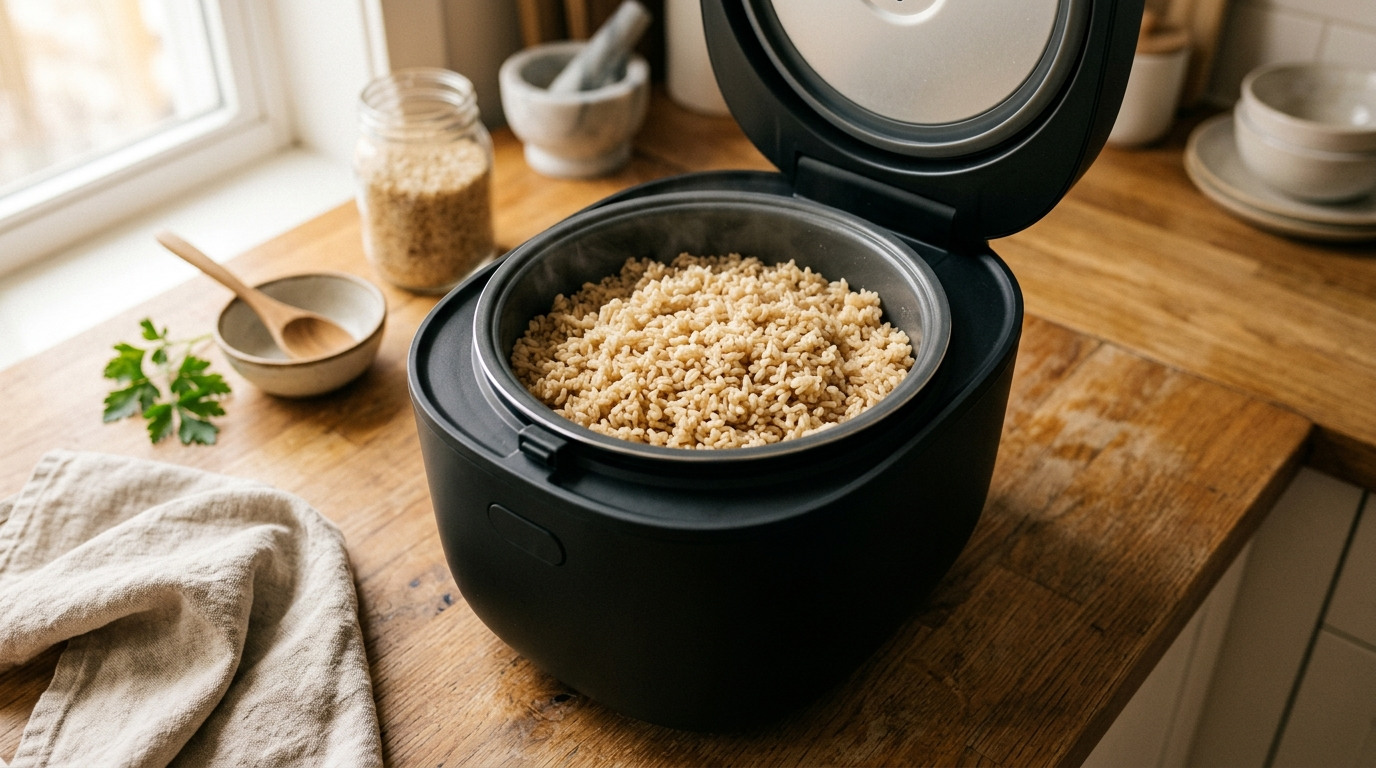
Few brands command the loyalty that Zojirushi does in the rice-cooker aisle, and the NS-LHC05 Micom Rice Cooker & Warmer is the brand’s answer for people who love that Zojirushi rice but don’t need a 10-cup machine monopolizing the counter. It’s a compact, 3-cup fuzzy-logic cooker aimed squarely at one- and two-person households — small in capacity, but unmistakably a Zojirushi in philosophy.
To be clear about what this is: not a hands-on lab test. What follows is our editorial synthesis of Zojirushi’s published manufacturer specifications and the consensus that emerges across verified owner reviews — the recurring praise, the recurring gripes, and the honest middle ground in between. The star rating is our informed editorial opinion, not a measurement.
Specs at a glance
| Specification | Detail |
|---|---|
| Brand / model | Zojirushi NS-LHC05 Micom Rice Cooker & Warmer |
| Type | Micom (microcomputer / fuzzy-logic) |
| Capacity | 3 cups uncooked white rice (0.54 L) |
| Cooking courses | White, sushi, mixed, sweet, brown, porridge |
| Keep features | Automatic keep-warm, reheat cycle |
| Inner pan | Spherical nonstick pan with detachable inner lid |
| Conveniences | Programmable timer, retractable power cord, carrying handle |
| Typical price | ≈$160–$200 (check Amazon for current pricing) |
What the NS-LHC05 actually is
The “Micom” in the name is the whole story. A Micom (microcomputer) rice cooker uses a fuzzy-logic controller to adjust temperature and timing as it cooks, rather than simply switching a heating element on and off — the kind of nuanced, real-time control that fuzzy-logic rice cookers are known for. In practice, that means the cooker reads conditions inside the pan and fine-tunes the heat curve for the specific grain and course you selected.
What you don’t get here is induction heating (IH). The NS-LHC05 heats from the bottom with a conventional element, as most cookers in this tier do; Zojirushi reserves IH for its pricier NP-series cookers. That isn’t a knock — for a 3-cup daily driver, a bottom-heated Micom is more than enough — but it’s worth knowing if you were expecting the premium, even heat distribution of an induction model at this price.
The cooking menu covers the courses most small households actually reach for — white, sushi, mixed, sweet, brown, and porridge, per the manufacturer’s spec sheet. A programmable timer lets you load the pan earlier in the day and arrive at cooked rice later, and the automatic keep-warm holds temperature after the cycle ends, with a separate reheat function for rice that’s been sitting. Build-wise, owner consensus lines up with Zojirushi’s reputation: a dense, stable body that doesn’t walk around the counter during a cycle, a spherical nonstick inner pan, and a detachable inner lid that pops out for rinsing. These are small details that add up across years of daily use.
How it cooks, according to owners
The single most common thread across verified reviews is rice quality. Owners describe consistently tender, fluffy white rice with separated grains and none of the mushy, waterlogged bottom layer that cheaper on/off cookers tend to leave behind. Brown rice, sushi rice, and porridge draw similar praise for coming out properly textured rather than gummy or scorched.
Much of that comes down to the fuzzy-logic control loop, which holds the rice at temperature long enough for it to fully absorb water before a final drying phase — the same principle that makes Micom cookers slower, but markedly more precise, than basic models. The cooker is effectively taking its time on your behalf, and owners who’ve used both cheap and Micom machines say the texture difference is obvious on the plate.
The keep-warm function draws nearly as much praise as the cooking itself. Owners report that rice held for hours — sometimes well past a typical workday — stays soft and edible instead of crusting on the bottom or drying into a hard puck. For people who cook once and graze through the day, that’s a meaningful, everyday benefit rather than a marketing bullet point.
Where it frustrates owners
No cooker is perfect, and the NS-LHC05’s weaknesses are well-documented and consistent across owner feedback:
- It’s slow. This is the dominant complaint, and it isn’t a defect — it’s the trade-off for fuzzy-logic cooking. Cycles run notably longer than basic cookers, and a pot of white rice can take close to an hour. If you’re used to a cheap cooker that finishes in roughly twenty minutes, the first few waits feel jarring.
- It’s expensive for the capacity. You’re paying Zojirushi money for three cups. Owners who love the rice consider it well spent; owners who simply need some rice on the table often question the premium.
- No induction heating. At this price, some shoppers expect IH and are surprised to find a conventional heated-pan design instead.
- The capacity caps out small. Three uncooked cups is roughly two modest servings (or one generous one). It’s the right size for solo cooks and couples, full stop — not for families, batch cooking, or entertaining.
- Nonstick coatings aren’t forever. Like every nonstick inner pan, the coating will eventually wear with years of use and the occasional metal-utensil scrape. Plan to use the included paddle and budget for a replacement pan down the road — Zojirushi sells them.
Who should buy it — and who should skip it
Buy it if you cook rice several times a week for one or two people, you value texture and consistency over raw speed, and you want a cooker that holds rice warm through the day. The NS-LHC05 shines for small households that treat rice as a daily staple rather than an occasional side.
Skip it if you regularly cook for three or more, you need rice in a hurry, or your budget sits closer to the entry tier. A 3-cup Micom at this price is a poor fit for families, impatient cooks, or anyone who’d rather spend less and get more capacity.
If you’re shopping this exact niche, our roundup of the best rice cooker for one person walks through several compact picks, and our guide to the best rice cooker for a small apartment covers footprint-friendly models more broadly.
How it compares to other Zojirushi cookers
If you like the brand but the NS-LHC05 isn’t quite the right fit, two siblings are worth a look.
The Zojirushi NS-ZCC10 is the larger, legendary “Neuro Fuzzy” 5.5-cup cooker — the model most people picture when they think of Zojirushi. If you want the same cooking philosophy with more capacity, it’s the natural step up from the 3-cup LHC05.
The Zojirushi NS-TSC10 is the brand’s more affordable 5.5-cup Micom — similar capacity to the NS-ZCC10 at a lower price, and a strong value pick if you want more room than the 3-cup NS-LHC05 offers without paying for the top of the lineup.
The honest bottom line
The Zojirushi NS-LHC05 does exactly what it’s designed to do: turn out excellent rice for one or two people, day after day, with a keep-warm function that genuinely works. Its weaknesses — slow cycles, a premium price, and a small capacity — are the known, well-documented trade-offs for that quality, not surprises that emerge after purchase. If you match its use case, it’s a long-term buy that should serve a small household for years. If you don’t, its quirks will grate from day one.
Our editorial rating: 4.5 / 5 — excellent at its specific job, held back only by the deliberately slow cycles and the price-to-capacity ratio that come with the Zojirushi Micom territory.
Common questions
Is the NS-LHC05 worth it for one person? For a solo cook who eats rice most days and wants set-and-forget quality, yes — the keep-warm function in particular suits a “cook once, eat all day” routine. For occasional use, the premium is hard to justify; see our best rice cooker for one person picks for cheaper alternatives.
How long does it take to cook a pot of rice? Longer than you might expect. Fuzzy-logic cycles are deliberately unhurried, and white rice can take close to an hour end to end. It isn’t a malfunction — it’s how the cooker reaches its texture.
Can it cook brown rice? Yes, there’s a dedicated brown-rice course, and owners rate the results highly. Note that this is not a GABA / extended-sprout brown-rice cooker — that feature lives on Zojirushi’s induction-heating models, not this Micom one.
Does the nonstick coating last? With the included paddle and basic care, years of regular use. No nonstick coating is permanent, and Zojirushi sells replacement inner pans for when the time comes.
Can it handle a family dinner? Not really. Three uncooked cups is a small batch by design; if you regularly cook for three or more, a 5.5-cup model like the NS-TSC10 or NS-ZCC10 above is the better call.
✅ Pros
- Consistently tender, well-textured rice across white, sushi, brown, and porridge
- True 3-cup footprint that suits small kitchens and one-to-two-person households
- Automatic keep-warm and a reheat cycle that hold rice for hours without drying it out
- Removable inner lid and a nonstick spherical pan make cleanup quick
- Typical Zojirushi build quality — dense, stable, and built to last for years
❌ Cons
- Famously long cook cycles — a pot of white rice can take close to an hour
- Premium price for a 3-cup capacity cooker
- No induction heating at a price point where some rivals offer it
- Capacity tops out around two modest servings, so it won't serve a family
- The nonstick inner coating will eventually wear with years of use
🍚 You Might Also Like

Best Rice Cooker for One Person: Small Batch Picks
For solo rice eaters, the Dash Mini ($25) is unbeatable for casual use, the Toshiba TRCS01 ($50) hits the sweet spot of quality and price, and the Zojirushi NHS-06 ($40) is the budget reliability king. If you eat rice daily, the Zojirushi NP-GBC05 3-cup IH is worth the investment.
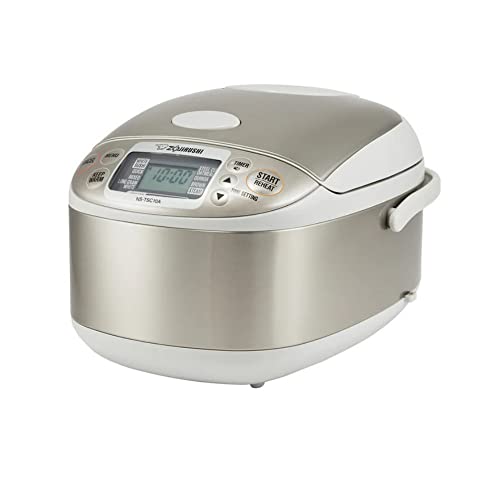
Zojirushi NS-TSC10 Review: The Affordable Micom That Sells by the Truckload
The sensible-default Zojirushi. It gives you most of the flagship's dependable rice for a good deal less. If you want the Zojirushi name without the Neuro Fuzzy premium, this is the volume-seller to reach for.
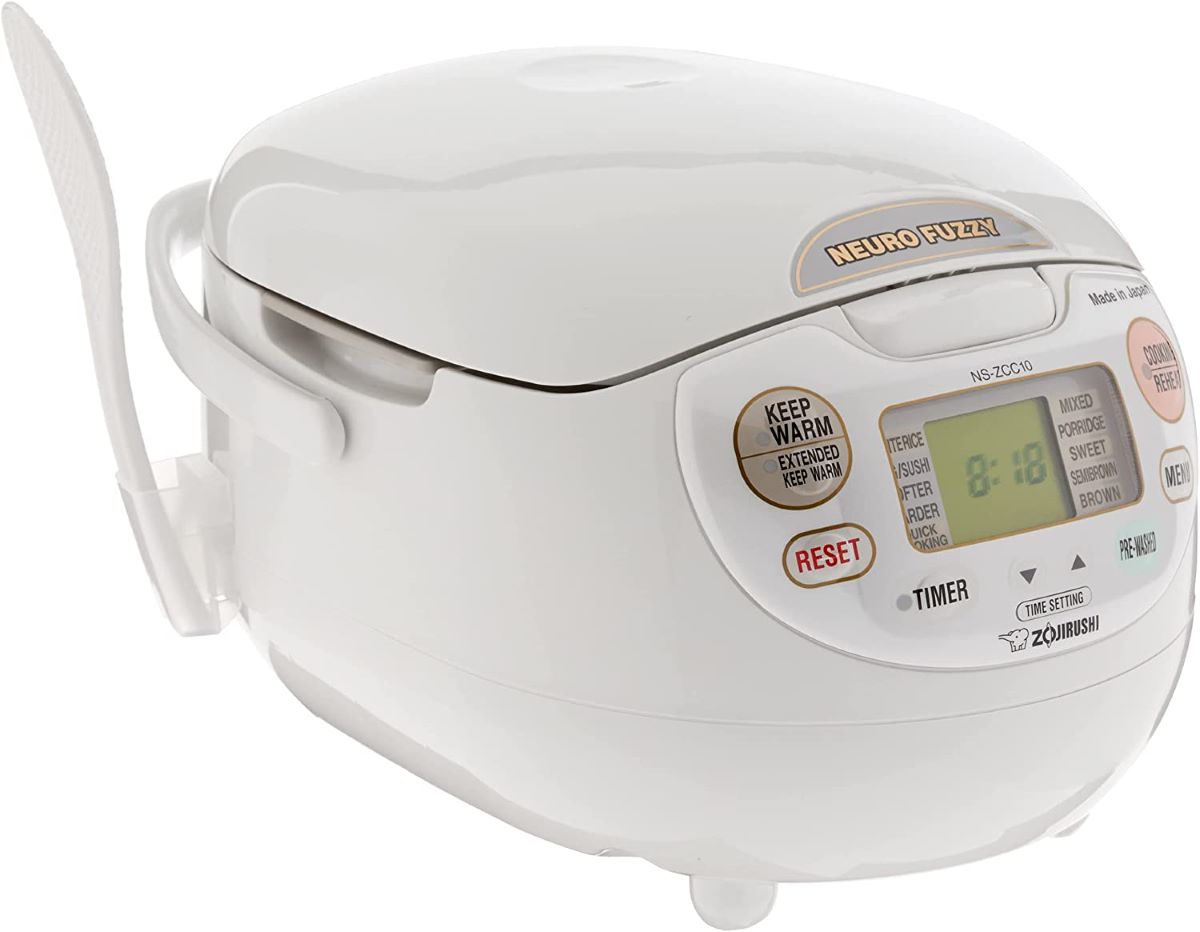
Zojirushi NS-ZCC10 Review: The Neuro Fuzzy Legend
The gold standard of fuzzy logic rice cookers. If your budget allows, this is the one to buy.
Ready to Upgrade Your Rice Game?
The Zojirushi NS-LHC05 is waiting for you. Perfect rice, every time.
Buy on Amazon 🍚 🛒