
Zojirushi NP-HCC10 vs NS-ZCC10: Which Rice Cooker Should You Buy?
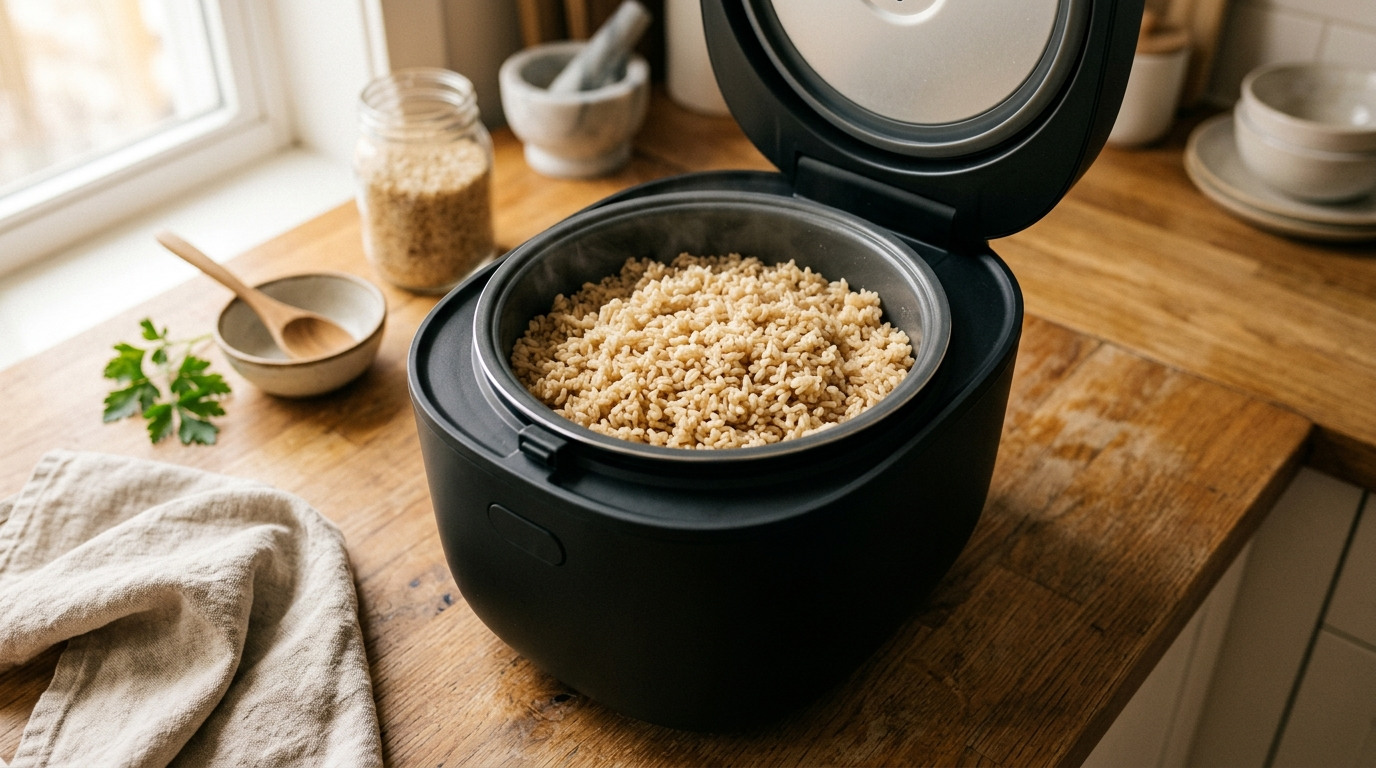
The induction NP-HCC10 and the Neuro Fuzzy NS-ZCC10 are Zojirushi's two most compared 5.5-cup cookers. Here's an honest, research-based breakdown of heating, menus, price, and who each suits.
As an Amazon Associate we may earn a commission from qualifying purchases made through links on this page, at no extra cost to you.
If you’re shopping for a Zojirushi and you’ve narrowed it down to two cookers, congratulations — you’ve already skipped past the confusing part. The Zojirushi NP-HCC10XH Induction Heating Rice Cooker and the Zojirushi NS-ZCC10 Neuro Fuzzy Rice Cooker are the two 5.5-cup Zojirushi models that show up in almost every “which one should I buy?” thread, and for good reason: they sit at the same capacity, the same build tier, and a surprisingly similar level of owner satisfaction.
This is a research-based comparison. It synthesizes Zojirushi’s published specifications with the consensus of verified owner reviews — it is not first-hand lab testing. No star ratings, cook counts, or measurements here are invented; where a figure appears, it comes from a cited source.
The quick verdict
- Get the induction model if you cook a lot of brown rice, want the most even heating Zojirushi offers at this size, and you’re fine paying a premium for it.
- Get the Neuro Fuzzy model if you want genuinely excellent everyday white and sushi rice at a noticeably lower price, and you don’t care about the GABA brown rice cycle.
The single thing that actually separates them is the heating system: the NP-HCC10 cooks with induction, the NS-ZCC10 cooks with a conventional heating plate. Almost every other difference — price, the GABA setting, minor refinements — flows from that one choice. For a wider view of where these two sit in the lineup, see our Best Zojirushi Rice Cookers buying guide.
The one difference that matters most: how they heat
Zojirushi lists the NP-HCC10 under its “IH + Micom” category and the NS-ZCC10 under “Micom,” and that label tells you the whole story. (Zojirushi’s rice cooker category page shows both models alongside their feature tags.)
The NS-ZCC10 uses Zojirushi’s “Neuro Fuzzy” logic on top of a conventional bottom heating plate. A microcomputer reads a thermostat and makes small, continuous adjustments to the temperature as the rice cooks — that’s the “fuzzy logic” part. It’s the approach that made Zojirushi’s reputation, and it produces very consistent results for everyday rice. For more on how that works, see our explainer on the Neuro Fuzzy logic rice cooker.
The NP-HCC10 replaces the heating plate with induction. An electromagnetic coil energizes the inner pot itself, so the pot becomes the heat source rather than sitting on top of one. (Induction heating is the same principle behind induction cooktops.) The practical effect is more even heat distribution across the whole pot and faster, more responsive temperature changes, because there’s no thermal lag from a plate warming up and cooling down.
Does that translate to dramatically better rice? For plain white rice, most owners say the difference is subtle — both machines make excellent rice. Induction shows its advantage most clearly with harder, slower-cooking grains (brown rice, mixed rice, larger batches), where even heat from all sides reduces the soggy-top / crunchy-bottom problem. If you’re weighing whether that upgrade is worth the money, our induction rice cooker cost-benefit analysis walks through it in detail.
Zojirushi NP-HCC10 vs NS-ZCC10: the spec comparison
Both cookers are the same size — Zojirushi’s “10” designation, which holds about 5.5 cups of uncooked rice (roughly ten 6-ounce cups cooked). So capacity is a wash; this comparison is really about heating method, menus, and price.
| NP-HCC10 (Induction) | NS-ZCC10 (Neuro Fuzzy) | |
|---|---|---|
| Heating system | Induction Heating (IH) + Micom | Conventional plate + Micom |
| Capacity | ~5.5 cups uncooked | ~5.5 cups uncooked |
| Brown-rice cycle | Brown + GABA brown rice | Semi-Brown + Brown |
| Notable menus | Steam-Reduce, Sushi, Porridge, Sweet | Sushi, Porridge, Sweet, Mixed |
| Power (approx., per Zojirushi specs) | ~1,230 W | ~680 W |
| Made in | Japan | Japan |
| Price tier | Premium | Mid-range |
| Best for | Brown-rice and induction enthusiasts | Everyday value buyers |
A few notes on the table. The wattage difference is real but not something most owners notice in daily use — induction simply needs more power to drive the magnetic field. The bigger functional gap is the GABA brown rice cycle, which only the NP-HCC10 has. “GABA” stands for gamma-aminobutyric acid, and the cycle germinates brown rice over a long, warm soak before cooking, which is said to boost nutrient availability and soften the texture. If brown rice is a staple in your house, that setting alone is a reason to lean toward the NP-HCC10 — and it pairs naturally with our guide to the best rice cooker for brown rice.
The induction pick: Zojirushi NP-HCC10
The Zojirushi NP-HCC10XH Induction Heating Rice Cooker is the premium choice of the two. Beyond induction heating, it adds a Steam-Reduce setting (which cuts down on the starchy sputter through the vent during cooking) and the GABA brown rice cycle mentioned above, along with the usual white (regular / softer / harder), mixed, sushi, porridge, and sweet menus.
The consensus among verified owners is consistent:
What owners like:
- Noticeably even results, especially on brown rice and larger batches.
- The GABA brown rice cycle, which brown-rice eaters specifically praise.
- Quiet operation and Zojirushi’s typically overbuilt keep-warm and reheating functions.
- Made in Japan build quality.
What owners gripe about:
- The price — it runs meaningfully higher than the Neuro Fuzzy model.
- Cook times can be long; the more careful cycles (GABA, some brown settings) take a while.
- The interface is functional but not modern, a common Zojirushi complaint at this tier.
The value pick: Zojirushi NS-ZCC10
The Zojirushi NS-ZCC10 Neuro Fuzzy Rice Cooker is the long-running favorite, and the reason it keeps topping recommendations is simple: it delivers most of the Zojirushi experience for less money. It uses the conventional heating plate plus Neuro Fuzzy logic, with menus covering white/sushi, mixed, porridge, sweet, semi-brown, brown, rinse-free, and quick.
What owners like:
- Outstanding white and sushi rice for the price.
- Reliable, predictable results over years of use — durability is a recurring theme in reviews.
- Simple, intuitive controls; a good first “nice” rice cooker.
- Made in Japan, with the same keep-warm and reheating features as the pricier model.
What owners gripe about:
- No GABA brown rice cycle, and brown rice is good but not quite at the induction model’s level.
- Conventional heating is slightly less even on big batches.
- Like its sibling, the cycle times run long, and some wish the finish and display felt more current.
Who should buy each one
Buy the NP-HCC10 if you eat brown or mixed rice often, you cook for a family and frequently run near-full batches, or you simply want the most refined, even heating available at this capacity. The GABA cycle and Steam-Reduce feature are the concrete things you get for the extra money.
Buy the NS-ZCC10 if your rice is mostly white, jasmine, sushi, or basmati, you want to spend less, and you value the proven reliability of a model that has been popular for years. For most households that just want great everyday rice, this is the smarter spend.
How to choose between them
If you’re still torn, three questions usually settle it:
- How much brown rice do you eat? A lot → NP-HCC10 (GABA cycle, better even heat). Rarely → NS-ZCC10 is plenty.
- What’s your budget? If the gap matters, the NS-ZCC10 gives you most of the experience for less. If you’d rather buy once and not think about it, the NP-HCC10 is the ceiling at this size.
- Do you cook large batches? Near-full pots benefit more from induction’s all-around heat; for a couple of cups of white rice, you won’t tell the difference.
Frequently asked questions
Do the NP-HCC10 and NS-ZCC10 cook the same amount of rice? Yes. Both are Zojirushi’s “10” size, holding about 5.5 cups of uncooked rice. Capacity is identical, so size shouldn’t drive your decision.
Is induction really better than Neuro Fuzzy? “Better” depends on the rice. Induction heats more evenly and responsively, which helps most with brown rice, mixed rice, and full pots. For everyday white rice, the difference is subtle, and many owners happily prefer the cheaper Neuro Fuzzy model.
Which one is better for brown rice? The NP-HCC10, because of its dedicated GABA brown rice cycle and more even induction heating. See our brown rice rice cooker guide for the broader field.
Why is the NS-ZCC10 still so popular? It hits a strong price-to-performance point, makes excellent standard rice, and has a long track record of reliability. For most people it’s the sensible default.
Are both made in Japan? Yes. Zojirushi lists both as Made in Japan, which is part of why they’re positioned above the company’s more budget-oriented lines.
The bottom line
You can’t really make a bad choice here — both are well-regarded, Japan-built 5.5-cup cookers that will outlast a cheap appliance many times over. If brown rice and even heating matter to you, the Zojirushi NP-HCC10XH Induction Heating Rice Cooker earns its premium. If you want the best value and mostly cook white rice, the Zojirushi NS-ZCC10 Neuro Fuzzy Rice Cooker is the pick that keeps most owners happy for years.
Related Articles
Zojirushi vs Tatung: Modern Tech vs Old-School Simplicity
Two completely different rice cooker philosophies, Zojirushi's microcomputer precision vs Tatung's two-button steam design. We break down who should buy which.
comparisonKorean Rice Cooker Cuckoo Guide: Which Model Fits?
Cuckoo rice cookers are best for Korean-style sticky rice, brown rice, mixed grains, and pressure cooking. Here is how to choose the right Cuckoo model.
comparisonZojirushi vs Tiger Rice Cooker: The Definitive Head-to-Head Comparison
Zojirushi and Tiger are Japan's top rice cooker brands. We compare build quality, rice texture, features, and long-term value across every price tier to help you choose.