
Zojirushi Induction Rice Cooker Guide: Which NP Model Should You Buy in 2026?
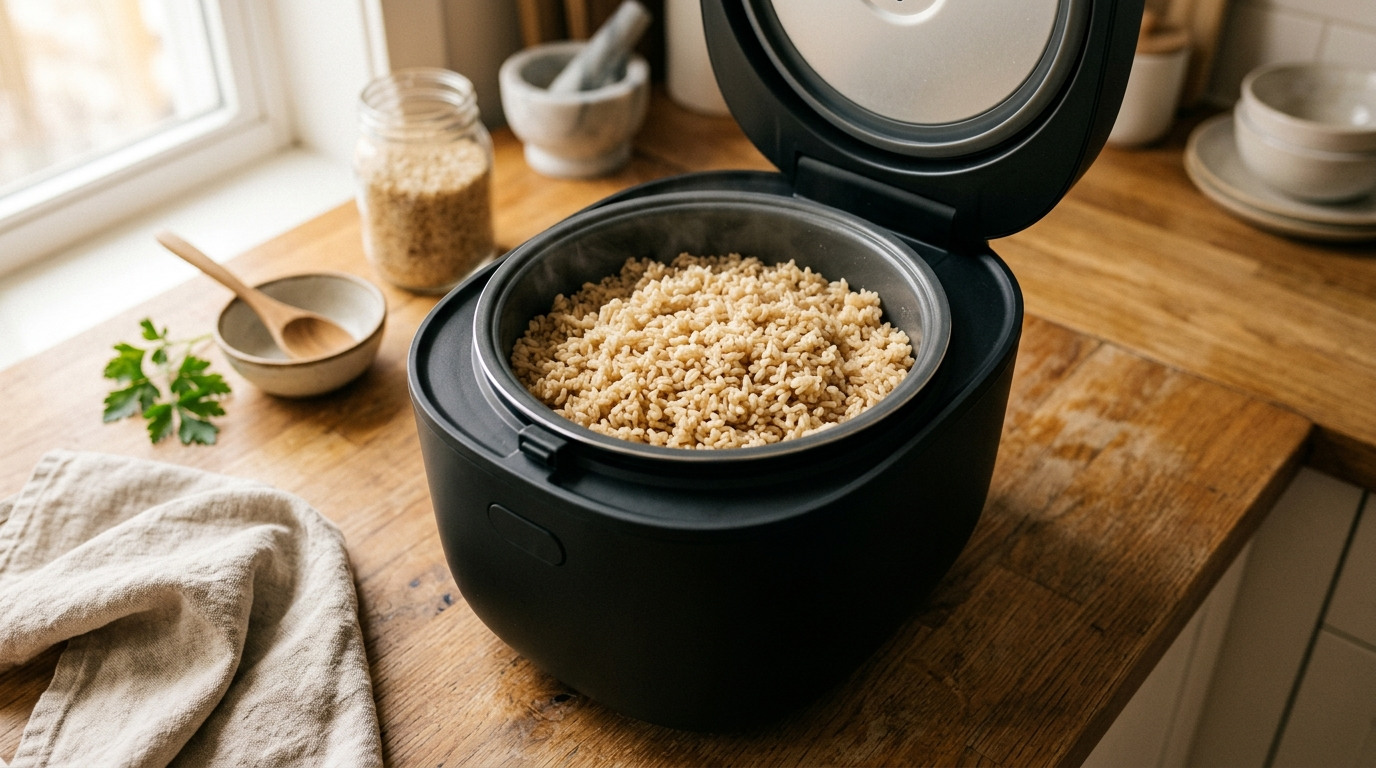
Zojirushi's induction rice cookers sit at the top of its lineup. This research-based guide compares the NP-GBC05, NP-HCC10, and pressure-induction NP-NVC models so you can pick the right one.
If you’ve narrowed your rice cooker search down to Zojirushi, you’ve probably hit the same fork in the road as everyone else: the affordable Micom and Neuro Fuzzy machines, or the induction-heating NP models at the top of the range. This guide walks through what a Zojirushi induction rice cooker actually does differently, how the main models sold in the US compare, and what owners consistently report about living with them — so you can decide whether the premium is worth paying for your kitchen.
As an Amazon Associate we may earn a commission from qualifying purchases made through links on this page, at no extra cost to you.
A note on methodology: this is a research-based guide, not a hands-on review. It synthesizes verified owner feedback from long-running Amazon review sections and Reddit’s rice cooker communities, manufacturer specifications published on Zojirushi’s official site, and expert roundups from established publications. Where a claim comes from owners rather than documentation, we say so.
Why Induction Heating Matters in a Zojirushi
In a conventional rice cooker — including Zojirushi’s own Micom machines — a resistive heating plate presses against the base of the inner pot. Heat enters from one surface and has to work its way up through the rice and water. Induction heating flips this around: an electromagnetic coil around the body of the cooker induces current directly in the ferromagnetic inner pot, so the pot itself becomes the heating element. This is the same underlying physics used in induction cooktops, and you can read a neutral technical explanation of it on Wikipedia’s induction heating article.
There are two practical consequences. First, heat is generated through the walls of the pot, not just the bottom, so the whole rice bed sees more even heat. Second, because there is no thermal mass of a hotplate between the controller and the rice, the Microcomputer (“Micom”) brain can raise and lower power almost instantly and fine-tune the cooking curve in small steps. Zojirushi credits that responsiveness for the texture control its induction machines are known for, and its product documentation positions induction as the top of its rice cooker hierarchy.
If you’re fuzzy (sorry) on how the “Micom,” “Neuro Fuzzy,” and induction tiers relate to each other, our Neuro Fuzzy vs Micom explainer covers the terminology, and our broader is an induction rice cooker worth it analysis covers the cost-benefit math. The short version: induction doesn’t make rice twice as good, but it does raise the ceiling — especially for delicate jobs like porridge, small batches, and brown rice.
The Zojirushi Induction Lineup: Which NP Model Fits
Zojirushi’s US lineup shifts over time, so treat this as a map of the model families you’ll actually encounter at retailers, and double-check current availability on Zojirushi’s site. Note that all capacities use Zojirushi’s 180 ml rice cup, not a US 8-ounce cup — our rice cooker cup size explainer covers why that matters when you’re sizing a machine.
NP-GBC05 — compact induction (3-cup)
The entry point to Zojirushi induction. A 3-cup (0.54 L) machine with the classic lever-lid design and a condensed menu covering the core white, brown, mixed, and porridge programs. It’s best suited to one- or two-person households that want induction’s even heating without paying for menu options they’ll never touch. Check the current NP-GBC05 price on Amazon.
NP-HCC10 / NP-HCC18 — the mainstream induction pick (5.5 / 10 cup)
This is the model most people mean when they say “Zojirushi induction rice cooker.” The HCC10 handles 5.5 cups (1.0 L) and the HCC18 stretches to 10 cups (1.8 L) for larger families. Documented menu programs include white rice with selectable regular/softer/harder textures, mixed rice, porridge, sweet rice, semi-brown and brown rice, quick cooking, plus a steam-reduce mode that cuts condensation through the vent and a scorched setting for a crispy bottom layer. Owners praise it for sushi-grade white rice and consistent small batches. See the current NP-HCC10 price on Amazon, or our detailed NP-HCC10 vs NS-ZCC10 comparison if you’re torn between induction and the cheaper Neuro Fuzzy.
NP-NVC10 / NP-NVC18 — pressure + induction (5.5 / 10 cup)
The top of the range combines induction heating with pressure cooking. Pressurizing the pot raises the boiling point above 100 °C, which changes how the starch gelatinizes — the practical result, per both Zojirushi’s marketing and owner consensus, is softer, plumper grains closer to what Japanese restaurants serve. These models also add specialist programs, most notably a GABA brown rice mode that soaks the rice for an extended period before cooking to increase gamma-aminobutytic acid; our GABA brown rice guide goes deep on that setting, and our best pressure rice cooker roundup covers the category. Expect the longest cook cycles in Zojirushi’s lineup and the highest prices. Check the current NP-NVC10 price on Amazon.
What Owners Consistently Report
Synthesizing the long-running owner discussions on Amazon and Reddit, a clear pattern emerges across the induction range.
On the positive side, owners repeatedly describe white and sushi rice that is noticeably more uniform than what they got from basic cookers — minimal variation between batches, less crust, and better results at small one- or two-cup batches, which is exactly where bottom-heater machines struggle. Longevity is the other recurring theme: Zojirushi’s reputation for machines that run for a decade-plus comes up constantly in owner threads, and it’s a big part of the value argument in our is a Zojirushi worth it breakdown.
On the critical side, three complaints dominate. First, cook time: owners regularly report roughly 50–65 minutes for a standard white rice cycle on the HCC10, with brown and pressure cycles running meaningfully longer. Zojirushi’s fuzzy logic deliberately uses slow, staged soak-heat-rest curves rather than racing to done — that’s a feature of the design, but it’s a real adjustment if you’re used to a 25-minute budget cooker. Second, price: induction machines sit several tiers above conventional ones, and street prices fluctuate enough that you should always check current pricing rather than relying on a stale number. Third, maintenance nuance: the steam vent cap and inner lid gaskets need regular cleaning, which our how to clean a rice cooker properly guide walks through step by step.
Independent expert roundups have broadly landed in the same place — Wirecutter’s long-running best rice cooker guide has repeatedly recommended Zojirushi’s Micom and induction machines for people who eat rice regularly, while steering occasional users toward cheaper models.
How Zojirushi Induction Compares to the Alternatives
Vs. the Zojirushi Neuro Fuzzy (NS-ZCC10). The NS-ZCC10 is the benchmark Micom machine: one bottom heater, excellent white rice, roughly half the price. Induction’s advantages are most visible in brown rice, porridge, and small batches. Our Zojirushi Neuro Fuzzy review and head-to-head NP-HCC10 vs NS-ZCC10 comparison cover the tradeoffs in detail.
Vs. Korean pressure cookers. Cuckoo and Cuchen pioneered pressure rice cooking and compete directly with the NP-NVC range, often with faster cycles and more aggressive feature sets. See our Zojirushi vs Cuckoo comparison and best Korean rice cooker guide for that fight.
Vs. Tiger. Tiger’s Japanese-made machines (including the popular Tacook line) undercut Zojirushi on price with good everyday results; the consensus is that Zojirushi induction pulls ahead on texture precision and longevity. Our Zojirushi vs Tiger head-to-head has the details, and the best Zojirushi rice cooker buying guide places the induction models in the full brand lineup.
Keep-Warm and Food Safety
Zojirushi’s keep-warm function is genuinely well engineered — but cooked rice is a well-known food-safety edge case regardless of machine. The UK’s National Health Service advises cooling rice within about an hour of cooking and refrigerating it rather than leaving it out, because Bacillus cereus spores can survive cooking and multiply at room temperature (NHS guidance on reheating rice). Our keep-warm safety guide translates that into practical rice cooker habits, including when to stop using keep-warm and refrigerate instead.
Frequently Asked Questions
Is a Zojirushi induction rice cooker worth it over the Neuro Fuzzy? If you eat rice most days, cook a lot of brown rice or porridge, or are particular about sushi-rice texture, owner consensus says yes. If you cook white rice a couple of times a week, the NS-ZCC10 delivers most of the experience for much less — the induction value analysis breaks this down by usage pattern.
Why does it take so long to cook rice? The fuzzy logic controller runs a deliberate multi-stage curve — soak, gradual heat, sustained boil, rest — that takes close to an hour for white rice. The slow cycle is inseparable from the consistency owners praise; if speed is the priority, use the quick-cook menu or consider a pressure model.
Does it handle brown rice well? Yes — even heat through the pot walls is exactly what stubborn bran layers benefit from, and the dedicated semi-brown and brown programs run the longer soak cycles brown rice needs. See our brown rice in a rice cooker guide.
Can you buy a replacement inner pot? Yes, Zojirushi sells replacement inner pots and lids, and they’re model-specific — always match the part to your exact model number. Our inner pot replacement guide with compatibility chart covers the process.
The Verdict: Who Should Buy Which
Buy the NP-GBC05 if you’re a one- or two-person household that wants induction’s even heating in a compact footprint. Buy the NP-HCC10 or HCC18 if you want the sweet spot of the range — the texture control and menus that make induction worthwhile, without pressure-model pricing. Buy the NP-NVC10 or NVC18 only if you’re a daily-rice household chasing restaurant-grade texture or you specifically want the GABA brown rice program and accept the longest cycles and highest prices.
Whichever you pick, treat the inner pot coating gently — wooden or nylon tools only — and keep the vent cap clean, and there’s no reason a Zojirushi induction machine shouldn’t outlast several cheaper cookers. That longevity is the quiet argument for the premium: check the current price on Zojirushi induction rice cookers at Amazon before you decide.
Related Articles
Costco Tiger Rice Cooker: Is the Warehouse Deal Worth It in 2026?
Costco periodically stocks Tiger's JBV-A10U Tacook rice cooker at warehouse-club pricing. Here is what manufacturer specs and verified owner reviews say about the deal, and when Amazon or a Zojirushi upgrade makes more sense.
buying-guidesBest Rice Cooker for Indian Cooking: Biryani, Pulao, and Basmati
Find the best rice cooker for Indian cooking, including models tested with basmati, biryani, pulao, and jeera rice recipes in 2026.
buying-guidesIs an Induction Rice Cooker Worth It? A Practical Cost-Benefit Analysis
Induction heating rice cookers cost 2-3x more than standard models. We analyze whether the improved rice quality, energy efficiency, and durability justify the premium for different types of buyers.